The reason often depends on the structure involved, how you sleep and what happens during the day.
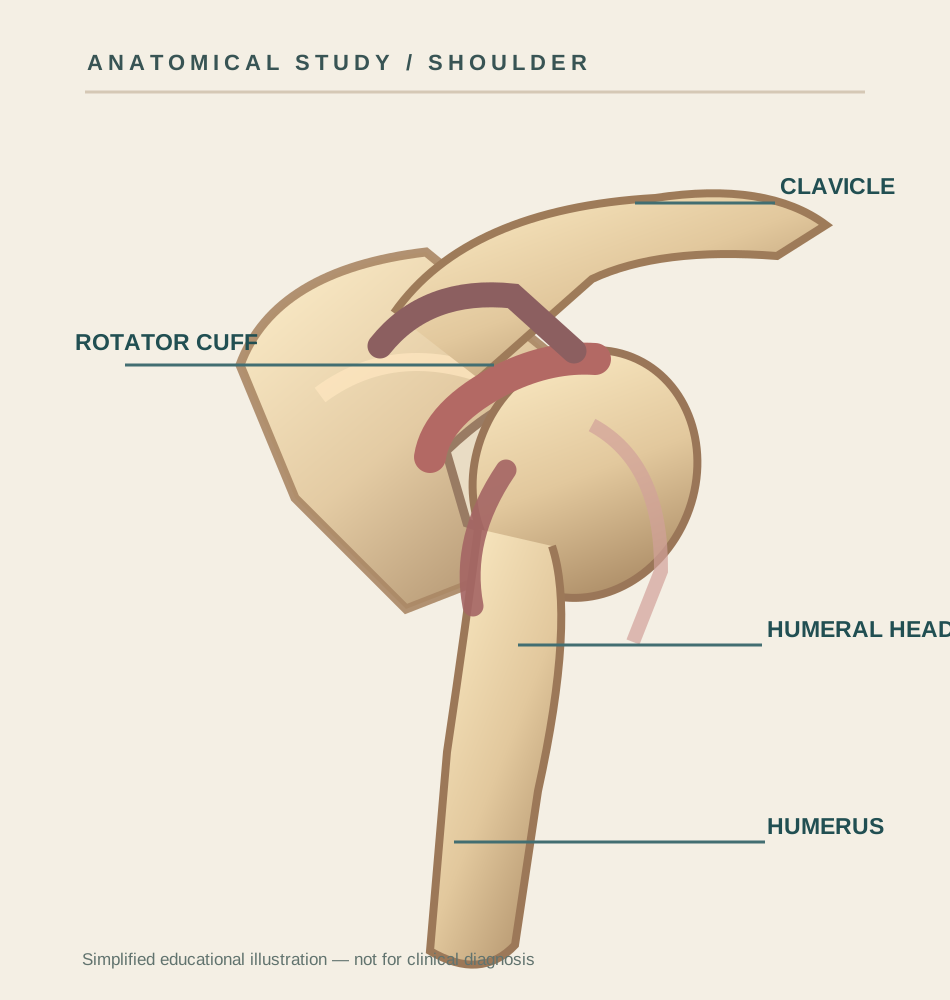
Night pain does not identify one diagnosis
Pain when lying on a shoulder can arise with rotator cuff disorders, bursitis, arthritis and other conditions. It is a helpful clinical clue but cannot identify the cause alone.
What the pattern of pain may suggest
Pain with overhead activity, weakness during lifting, stiffness affecting multiple directions and symptoms following injury all deserve separate consideration. A frozen shoulder typically has more marked restriction of passive motion.
How to prepare for a consultation
Note when symptoms began, which activities provoke pain, how sleep is affected and whether an injury occurred. Mention weakness, neck pain, tingling or changes in movement. Previous scans and prescriptions may help the discussion.
When to seek assessment
Persistent night pain, worsening weakness, an acute injury or substantial restriction of daily activity warrants medical evaluation. Sudden severe pain after trauma should not be managed by self-diagnosis.
Which details are most useful to track?
Recording which side hurts, how long you can sleep before pain begins and whether reaching or lifting causes weakness makes a consultation more informative. Symptoms alone cannot confirm a rotator cuff tear.
Why a shoulder examination matters
The clinician may compare active and assisted range of movement, strength and the location of tenderness. These findings guide whether imaging or a rehabilitation trial is appropriate.
Questions to bring to your specialist
- Which possible diagnosis best explains my specific symptoms?
- Will any imaging alter the plan?
- What are the available options and expected trade-offs?
- What changes should prompt an earlier review?